Afrikaans
 Shqip
 አማርኛ
 العربية
 Հայերեն
 Azərbaycan dili
 Euskara
 Беларуская мова
 বাংলা
 Bosanski
 Български
 Català
 Cebuano
 Chichewa
 简体中文
 繁體中文
 Corsu
 Hrvatski
 Čeština
 Dansk
 Nederlands
 English
 Esperanto
 Eesti
 Filipino
 Suomi
 Français
 Frysk
 Galego
 ქართული
 Deutsch
 Ελληνικά
 ગુજરાતી
 Kreyol ayisyen
 Harshen Hausa
 Ōlelo Hawaiʻi
 עִבְרִית
 हिन्दी
 Hmong
 Magyar
 Íslenska
 Igbo
 Bahasa Indonesia
 Gaeilge
 Italiano
 日本語
 Basa Jawa
 ಕನ್ನಡ
 Қазақ тілі
 ភាសាខ្មែរ
 한국어
 كوردی
 Кыргызча
 ພາສາລາວ
 Latin
 Latviešu valoda
 Lietuvių kalba
 Lëtzebuergesch
 Македонски јазик
 Malagasy
 Bahasa Melayu
 മലയാളം
 Maltese
 Te Reo Māori
 मराठी
 Монгол
 ဗမာစာ
 नेपाली
 Norsk bokmål
 پښتو
 فارسی
 Polski
 Português
 ਪੰਜਾਬੀ
 Română
 Русский
 Samoan
 Gàidhlig
 Српски језик
 Sesotho
 Shona
 سنڌي
 සිංහල
 Slovenčina
 Slovenščina
 Afsoomaali
 Español
 Basa Sunda
 Kiswahili
 Svenska
 Тоҷикӣ
 தமிழ்
 తెలుగు
 ไทย
 Türkçe
 Українська
 اردو
 O‘zbekcha
 Tiếng Việt
 Cymraeg
 isiXhosa
 יידיש
 Yorùbá
 Zulu

 🌿 Ecological Life
Plant-Based Pulp Trays and Natural Cardboard Trays: Compostable Solutions
Plant-Based Pulp Trays and Natural Cardboard Trays: Compostable Solutions
With the increase in environmental pollution today, consumers and businesses are looking for more sustainable options. Plant-based cellulose plates and natural cardboard plates are the most environmentally friendly disposable plate types due to their fully compostable structure.
In this article, we will examine the different types of compostable plates and their benefits for nature.
What is compostability?
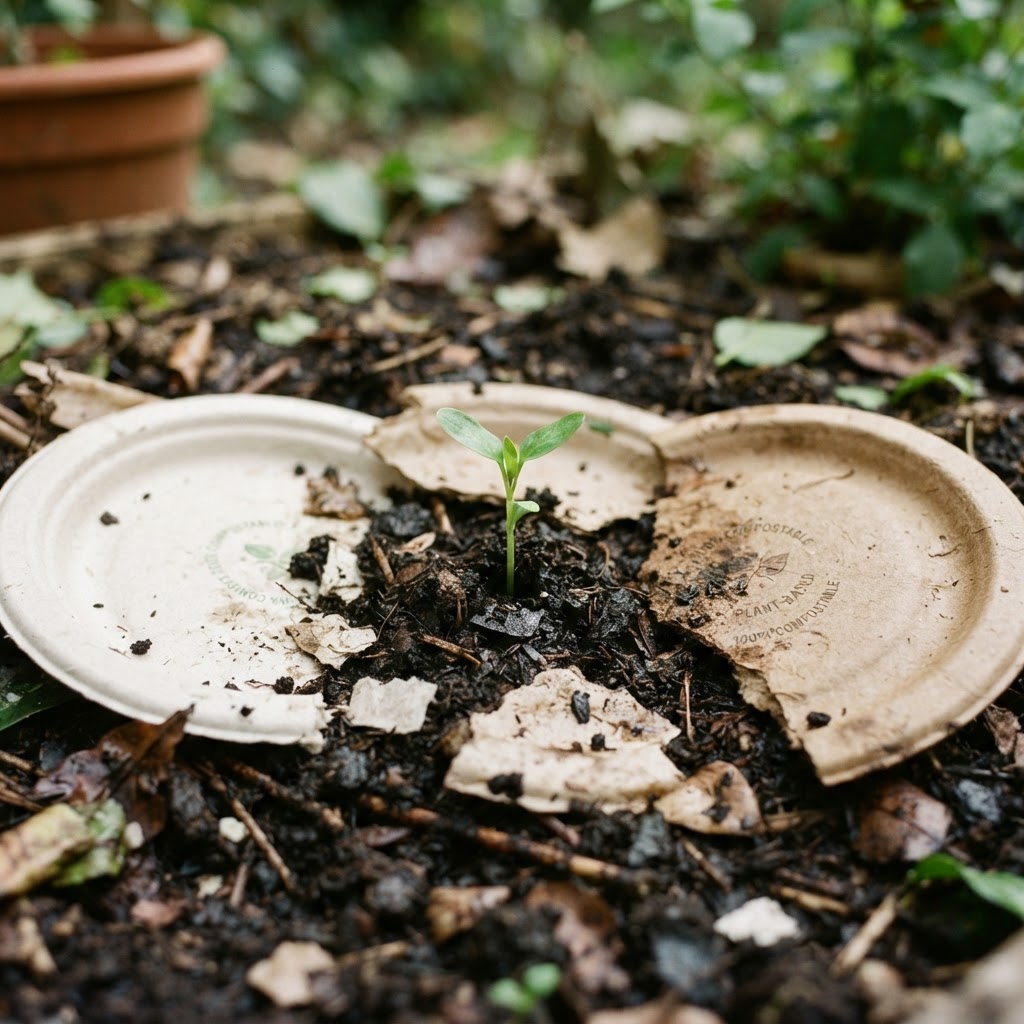
Compostability is the ability of a product to decompose into organic matter in nature, producing compost (fertilizer). Plant-based cellulose trays and natural cardboard trays are examples of products with this property.
Compostable products are processed differently than recycling. In nature, they are broken down by microorganisms and transformed into a nutrient source for plants.
What is a plant-based cellulose tray?
Plant-based cellulose trays are a type of tray made from plant-based materials such as sugarcane, wheat straw, bamboo, and corn cobs. These products are 100% compostable and are quickly absorbed by nature.
Properties of Vegetable Cellulose Plates
- 100% compostable: decomposes naturally within 90-120 days.
- Plastic-free: Completely plant-based.
- Suitable for hot foods: resistant up to 100°C.
- Food safety: Certified for food contact.
- Natural look: Aesthetic presentation with plant texture.
Sugarcane Plate
Vegetable cellulose sheets made from sugarcane are the most popular compostable option. They are produced by utilizing the sugarcane fibers left over from sugar production, thus contributing to waste reduction.
What are natural cardboard plates?
Natural cardboard plates are a type of plate made from unprocessed kraft paper or cellulose that does not contain chemical coatings. Because they are made from natural materials, they are extremely safe in terms of food safety.
Features of Natural Cardboard Plates
- No chemical coatings: Completely natural.
- Food safety: Certified ingredients.
- Compostable: Biodegradable
- Natural look: Unprocessed aesthetics
- Recyclable: Can be used in paper recycling.
Environmental Benefits of Compostable Trays
1. Waste Reduction
Plant-based cellulose trays and natural cardboard trays don't take up space in landfills. During the composting process, they are transformed into organic matter and returned to the soil.
2. Soil Fertility
Composting trays increase soil fertility by adding organic matter. This contributes to sustainable agricultural practices.
3. Reducing Carbon Emissions
While plastic production requires fossil fuels, plant-based cellulose sheets are made from plant-based sources. This significantly reduces carbon emissions.
4. Prevention of Microplastic Pollution
Plastic plates break down over time, forming microplastics. Natural cardboard plates and plant-based cellulose plates , on the other hand, are completely organic and therefore do not cause microplastic pollution.
How to make compost?
Plant-based cellulose trays and natural cardboard trays are suitable for composting. Here are the simple steps:
- Collect: Collect used plates along with organic waste.
- Break it up: Break the plates into small pieces for faster thawing.
- Put it in the compost bin: Add it to the organic waste pile.
- Wait: Compost will form in 90-120 days.
- Use it: Use the resulting compost as fertilizer for your plants.
Comparison with Chinet Paper Plates
Chinet paper plates are also an eco-friendly option, but plant-based cellulose plates are superior in terms of compostability. While paper plates are recyclable, cellulose plates can be composted directly.
| Features | Plant-Based Cellulose Plate | Natural Cardboard Plate | Chinet Paper Plate | |---|---|---|---| | Compostable | ✅ Fully | ✅ Yes | ⚠️ Partially | | Recyclable | ✅ | ✅ | ✅ | | Chemical-Free | ✅ | ✅ | ⚠️ | | Hot Food Resistance | ✅ High | ⚠️ Medium | ⚠️ Low |
Conclusion
If you want to adopt an eco-friendly lifestyle, plant-based cellulose plates and natural cardboard plates are ideal options. These products both protect nature and are returned to the soil through composting.
At Zorlu Ekolojik, we contribute to a sustainable future with our 100% compostable plant-based cellulose trays and natural cardboard trays .